Gas prices are once again a major topic of conversation across the United States. Whether you are filling up your personal vehicle or managing an entire fleet, the cost at the pump is impossible to ignore.
With global uncertainty impacting energy markets, many Americans are asking the same question:
Why are gas prices going up right now?
Let’s break it down in a clear, non-political way and more importantly, talk about what businesses can actually do about it.
What’s Driving Gas Prices Higher in the U.S.?
Gas prices are influenced by a combination of global and domestic factors. Even small disruptions can ripple quickly through the market.
Here are the biggest drivers right now:
- Global Supply and Demand
Oil is a global commodity. When supply tightens anywhere in the world, prices tend to rise everywhere.
- Increased demand during travel seasons
- Production changes from oil-producing regions
- Refinery capacity limitations
- Geopolitical Uncertainty
Any instability in key oil-producing regions can impact pricing.
When uncertainty increases, markets react quickly, often pushing prices higher even before actual supply changes occur.
- Refining and Distribution Costs
Gas prices are not just about crude oil.
They also include:
- Refining costs
- Transportation and logistics
- Storage and distribution
When any of these increase, consumers feel it at the pump.
- Seasonal Blends and Regulations
Different times of year require different fuel blends, especially in the summer months.
These blends are more expensive to produce, which contributes to price increases.
Why This Matters More for Fleet Owners
If you are managing a fleet, rising gas prices don’t just hit once; they hit every single day across multiple vehicles.
But here’s the part many people overlook:
Fuel cost is only one piece of the total expense.
The hidden cost is often labor.
The Hidden Cost of Gas: Labor, Time, and Inefficiency
Think about what actually happens when your team fuels up:
- Employees leave job sites
- Time is spent driving to gas stations
- Vehicles sit idle in line
- Productivity drops
When you add it up, you are not just paying for fuel, you are paying for:
- Wasted labor hours
- Lost revenue opportunities
- Operational inefficiencies
For fleets, this can quietly cost thousands per month.
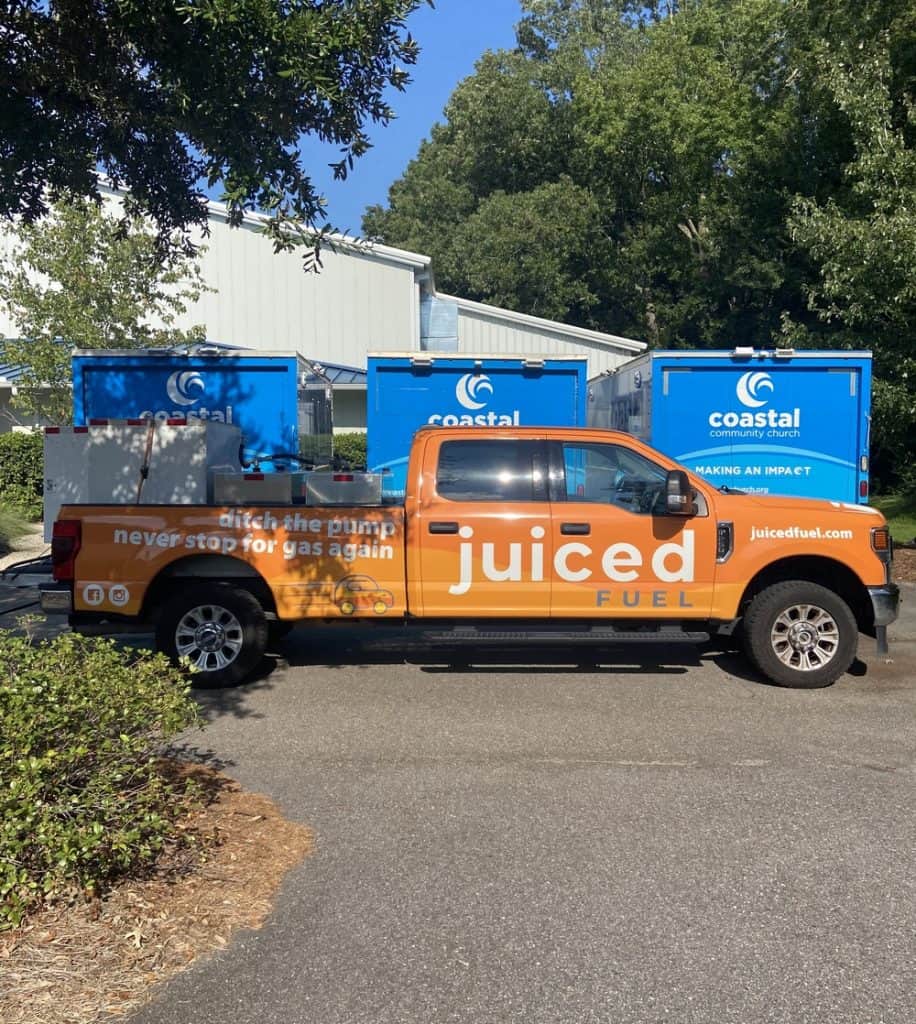
How Juiced Fuel Helps Fleets Save Money Even When Prices Rise
At first glance, many businesses assume fuel delivery is just about convenience.
But in reality, it is about cost control and efficiency.
- Eliminating Labor Waste
With Juiced Fuel, your team never has to stop working to refuel.
That means:
- No detours to gas stations
- No idle time
- No lost productivity
Your employees stay focused on revenue-generating work.
2. Reducing Operational Downtime
Fuel is delivered directly to your vehicles, on your schedule.
This creates:
- Predictable operations
- Better route efficiency
- Less disruption to your day
- Smarter Fuel Management
Instead of reacting to fuel needs, you can plan ahead.
- Scheduled deliveries
- Centralized fueling
- Better tracking of usage
This leads to more control over your overall fuel spend.
3. Total Cost Savings (Not Just Price Per Gallon)
Even if market fuel prices increase, fleets using Juiced Fuel often come out ahead because they are saving in areas that matter more:
- Labor costs
- Time
- Efficiency
- Wear and tear from unnecessary driving
The result: lower total cost per mile
The Bigger Picture: Adapting to a Changing Fuel Market
Gas prices will always fluctuate. That is the nature of a global commodity tied to complex supply chains.
The businesses that win are not the ones trying to predict prices.
They are the ones building systems that reduce their exposure to volatility.