
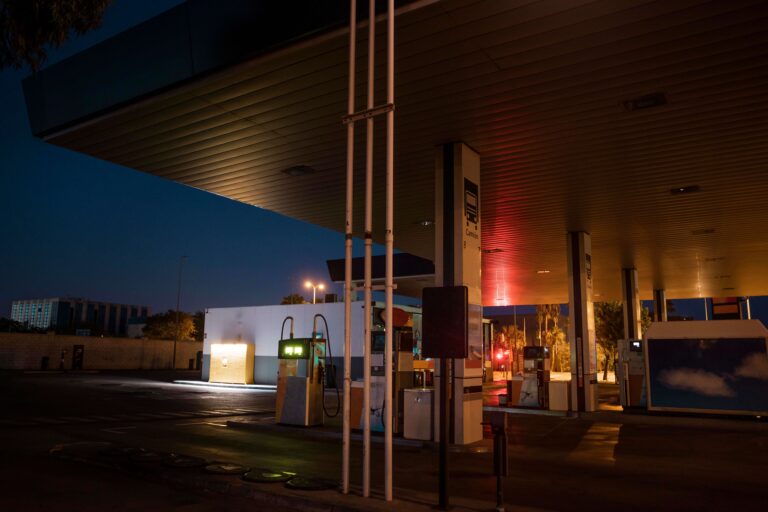
For decades, the gas station has been a fixed and familiar part of daily life. Pull in, fuel up, grab a coffee, get back on the road. It is a model so embedded in routine that most drivers rarely question it.
But the transportation and retail landscape is changing, and with that shift comes a new set of challenges for traditional fueling stations.
One of the most significant pressures is evolving consumer behavior. Convenience has become the dominant expectation across nearly every industry. Food, groceries, banking, shopping, transportation. People increasingly prefer services that reduce friction, waiting, and unnecessary stops. Fueling, historically unchanged, is now part of that broader convenience shift.
Time is another factor. Modern schedules are tighter, commutes are longer, and urban traffic continues to increase. What was once a quick stop can now feel like an interruption. For many drivers, especially busy professionals and families, fueling is viewed less as a routine errand and more as a logistical inconvenience to fit into an already crowded day.
Operational costs are rising as well. Gas stations carry substantial overhead, including real estate, construction, maintenance, staffing, utilities, compliance requirements, and environmental safeguards. Fluctuating fuel margins combined with higher operating expenses place increasing strain on profitability, particularly for independently owned locations.
Safety and liability concerns have also intensified. Stations must manage risks associated with spills, drive-offs, equipment maintenance, and customer incidents. As vehicles become more technologically advanced and regulations grow more complex, maintaining compliance requires continuous investment.
Then there is competition, not just from other stations but from alternative fueling models. Electric vehicle charging, hybrid adoption, and mobile fuel delivery services are reshaping how and where energy is accessed. While gasoline and diesel remain essential, drivers now have more options than ever before.
Location rigidity presents another limitation. A station serves customers within driving distance, relying on traffic patterns and physical proximity. By contrast, mobile fueling models reverse the equation by bringing fuel directly to vehicles, meeting drivers where they already are.
None of this suggests that gas stations are disappearing. They remain critical infrastructure and will continue to serve an important role. But like many long-standing industries, they are navigating a period of adaptation.
The broader trend is not about replacement. It is about diversification.
As consumer expectations evolve, the fueling ecosystem is expanding to include new solutions designed around flexibility, efficiency, and time savings. Traditional stations and mobile fueling services increasingly coexist, each serving different needs and use cases.
Juiced Fuel is part of that evolution, offering safe, compliant fuel delivery that complements the existing fueling landscape by providing an option built for modern routines.
Because the future of fueling is not defined by a single model, but by how well the industry adapts to the way people actually live and move.

